How uneven tread wear reveals hidden alignment and suspension problems.
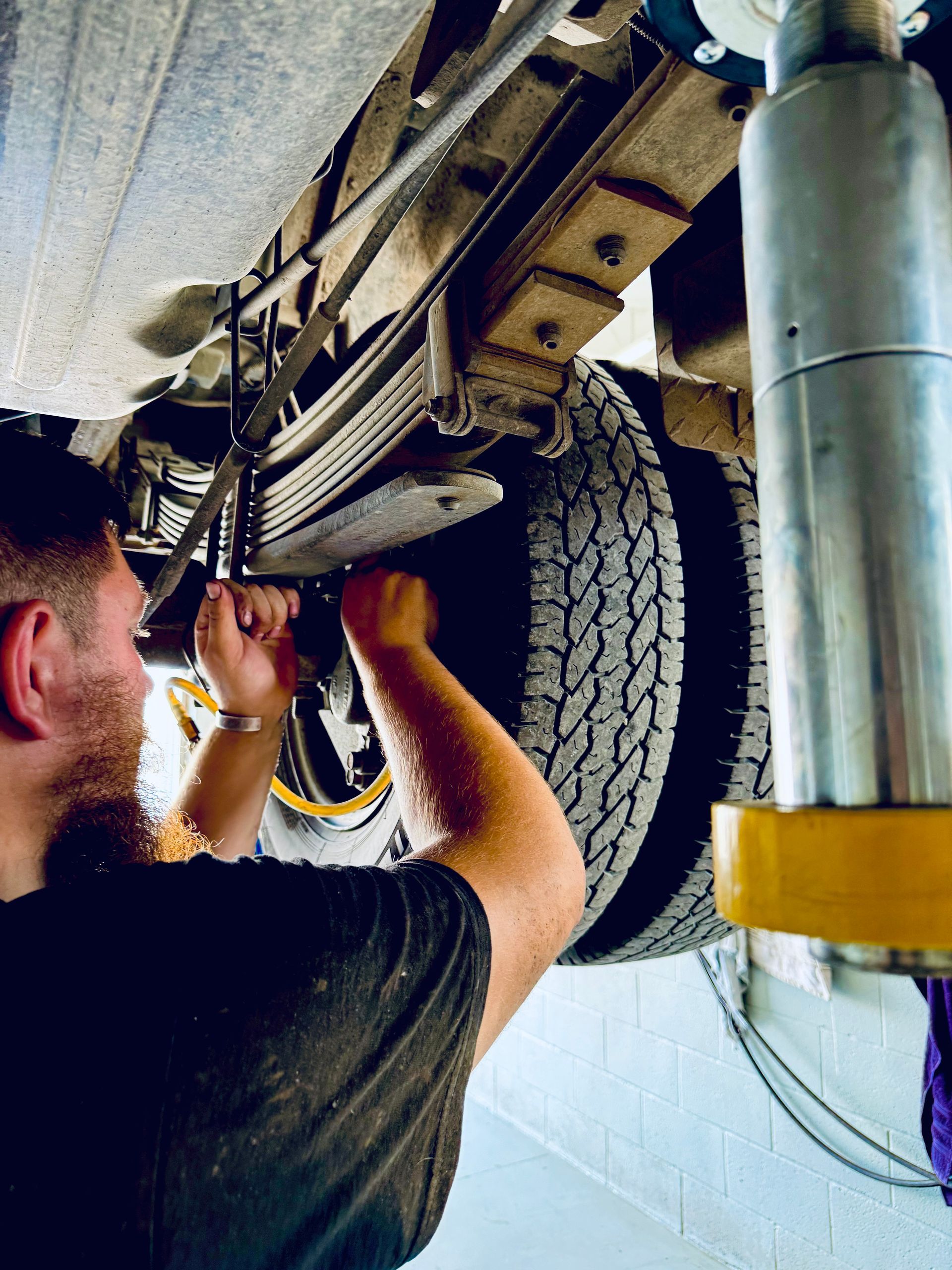
Your tires tell a story.
Uneven tread wear isn’t random — it’s usually a sign that something underneath your vehicle needs attention.
In Central Oregon, where road conditions, winter weather, and temperature swings are common, tire wear patterns can develop faster than many drivers expect.
Understanding what those patterns mean can help you prevent premature tire replacement and larger repair costs.
1. Inside or Outside Edge Wear
If one edge of the tire is wearing faster than the other, this typically indicates:
• Alignment issues
• Camber angle problems
• Suspension wear
An alignment adjustment may correct the issue — but if suspension components are worn, alignment alone won’t solve the root problem.
2. Cupping or Scalloping
Cupping appears as uneven dips around the tire tread.
This is often caused by:
• Worn struts or shocks
• Suspension instability
• Tire imbalance
Cupped tires can create road noise and vibration at highway speeds.
Replacing tires without addressing suspension often results in the problem returning.
3. Feathering
Feathering feels like the tread is smooth in one direction and sharp in the other.
This is usually a sign of:
• Improper toe alignment
• Steering component wear
An alignment can often resolve this — if caught early.
4. Center Wear
If the center of the tire wears faster than the edges, this often indicates:
• Overinflation
This is typically a maintenance issue rather than mechanical failure.
Why Tire Wear Matters
Tires are one of the most expensive maintenance items on your vehicle.
But replacing tires without correcting the underlying cause means the new set may wear out prematurely.
Alignment, suspension, and tires work together.
If one part of the system fails, the others are affected.
When Should You Have It Checked?
If you notice:
- Uneven wear
- Vibration at highway speeds
- Pulling to one side
- Steering wheel off-center
It’s worth having both alignment and suspension evaluated.
Catching issues early protects your investment and improves overall vehicle stability.